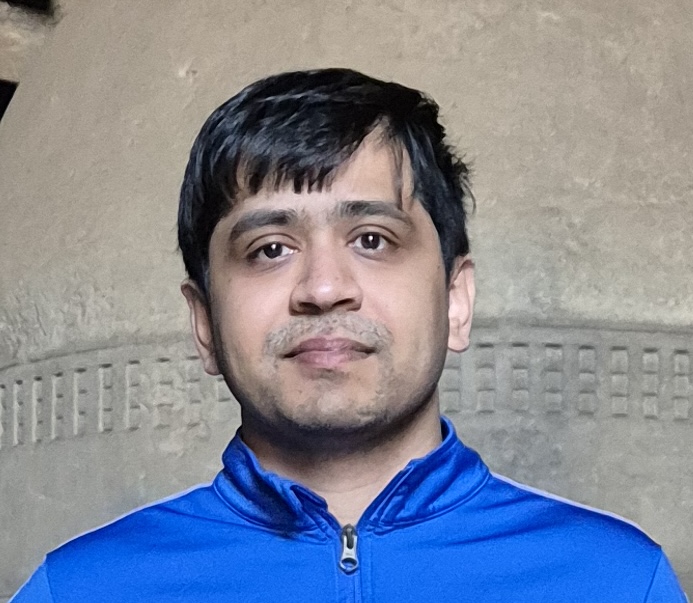
Debmalya Mandal
Assistant Professor of Computer Science, University of Warwick
I study how AI systems should learn and decide when people, incentives and societies are part of the loop — from aligning models with human feedback to designing fair collective decisions.
I am a member of the Foundations of AI & ML group at Warwick DCS. Before Warwick, I was a postdoc at the Max Planck Institute for Software Systems with Goran Radanovic and at Columbia’s Data Science Institute with Daniel Hsu. I received my PhD in Computer Science from Harvard, advised by David C. Parkes.
Research
AI and multi-agent systems, with an emphasis on theory and modelling and applications to societal problems.
Learning from human feedback
Making RLHF and preference-based alignment hold up when feedback is corrupted, strategic, shifted or multilingual.
See: Distributionally robust RLHF · Strategyproof RLHF
All papers on this topicRL in strategic and changing worlds
Performative reinforcement learning, principal–agent problems and multi-agent RL, where the learner’s policy reshapes its own environment.
See: Performative RL · Stochastic principal–agent problems
All papers on this topicRobustness
Learning guarantees that survive corrupted data, poisoning attacks and distribution shift, from offline and multi-agent RL to learning from human feedback.
See: Corruption robust RLHF · Corruption-robust zero-sum Markov games
All papers on this topicSocial choice and information elicitation
Voting with limited communication, surprisingly popular voting and peer prediction — getting good collective answers from people.
See: Efficient and thrifty voting · Surprisingly popular voting
All papers on this topicFairness and causality
Fairness guarantees beyond the training distribution, socially fair RL, and causal effect analysis in multi-agent systems.
See: Fairness beyond the training data · Agent-specific effects
All papers on this topicNews
All news- Five papers accepted at NeurIPS 2026, including Inference-Time Nash Alignment and Meta-Learning Preferences for Multilingual LLM Alignment.
- Distributionally Robust RLHF accepted at ICML 2026.
- One paper accepted at ICLR 2026 and two at AISTATS 2026.
- Rafid Ameer Mahmud joins the group as a PhD student, co-supervised with Paolo Turrini.
- Two papers accepted at NeurIPS 2025: Strategyproof RLHF and Stochastic Principal-Agent Problems.
Group
Group pageSelected publications
All publicationsService
Full list- Area chair: NeurIPS 2024–2026, ICML 2025–2027, ICLR 2027, IJCAI 2025
- Top reviewer: NeurIPS 2019 and 2021, ICML 2020
MB 1.15, Mathematical Sciences Building
University of Warwick, Coventry CV4 7AL, UK
Email is the best way to reach me.